
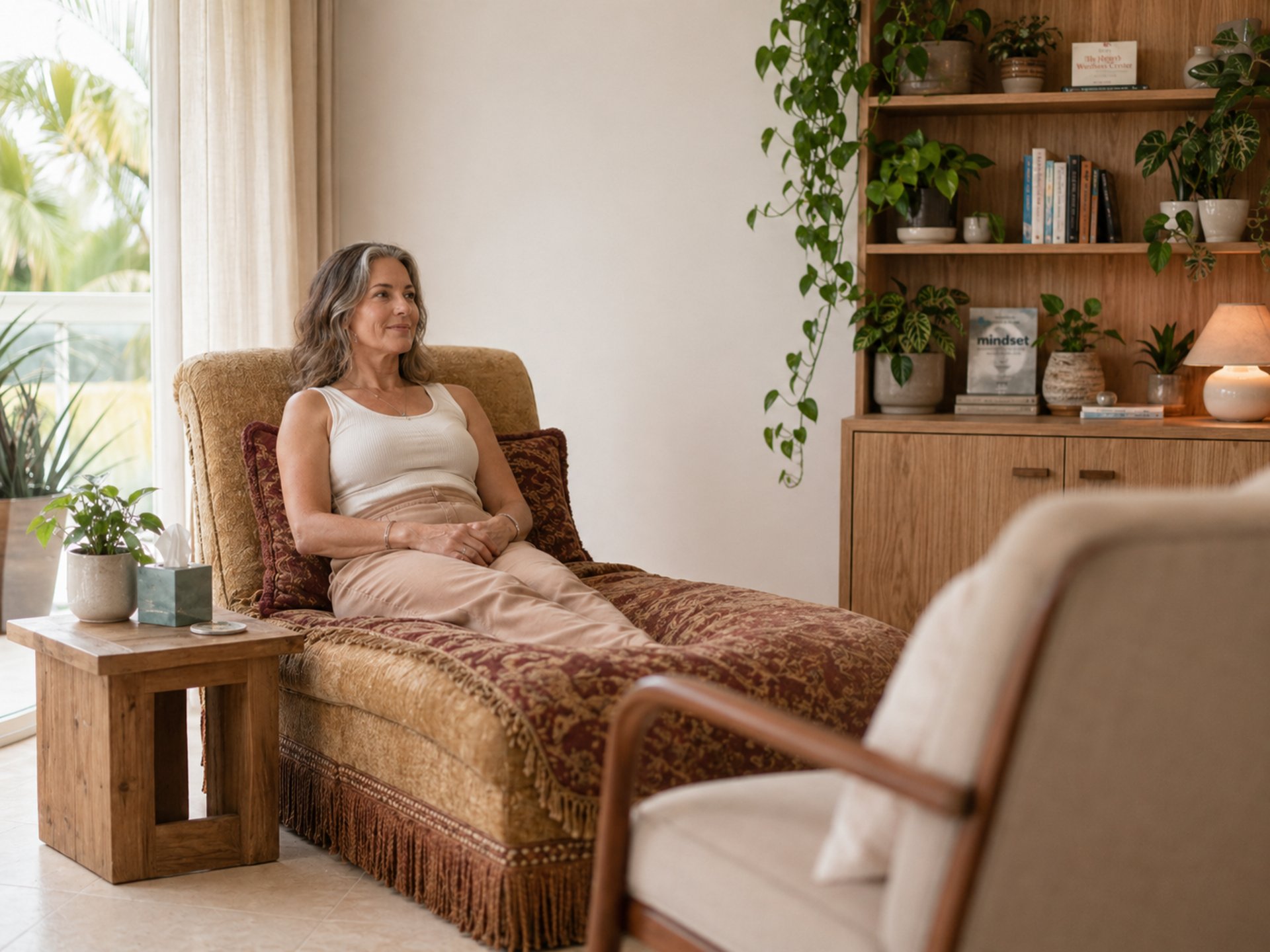
Pelvic Floor Hypnotherapy for Rehabilitation Support
Supporting the nervous-system side of pelvic floor recovery, muscle activation, body confidence and mind–body communication.
Learn How Hypnotherapy Can Support Recovery
For some people, recovery is not only about knowing which muscles to activate. The deeper challenge can be timing, confidence, anxiety, and helping the body feel safe enough to respond again.
AHA Registered Clinical Hypnotherapist | Palmwoods • Sunshine Coast • Online Australia-wide | Evidence-informed • Practical • Client-centred
Pelvic Floor Hypnotherapy for Rehabilitation Support
Hypnosis-supported neuromuscular rehabilitation for body awareness, muscle activation, confidence and nervous system regulation.
When the body does not respond the way it once did, the impact can reach far beyond physical function.
It can affect confidence, identity, intimacy, independence and trust in the body.
At Your Mind Redesigned, hypnotherapy may be used alongside appropriate medical and physiotherapy care to support the neurological and emotional side of recovery — especially where anxiety, guardedness, trauma history or loss of confidence may be interfering with progress.
Appointments available in Palmwoods on the Sunshine Coast and online.
Hypnotherapy Appointments
A Case Study in Hypnosis-Supported Pelvic Floor Recovery
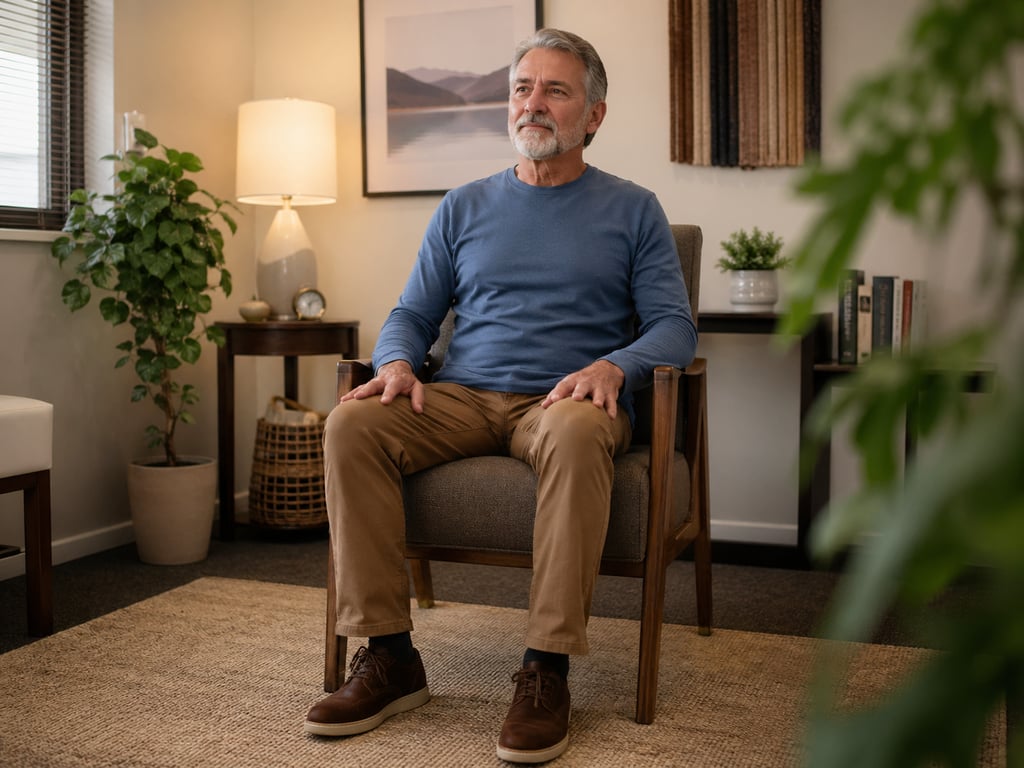
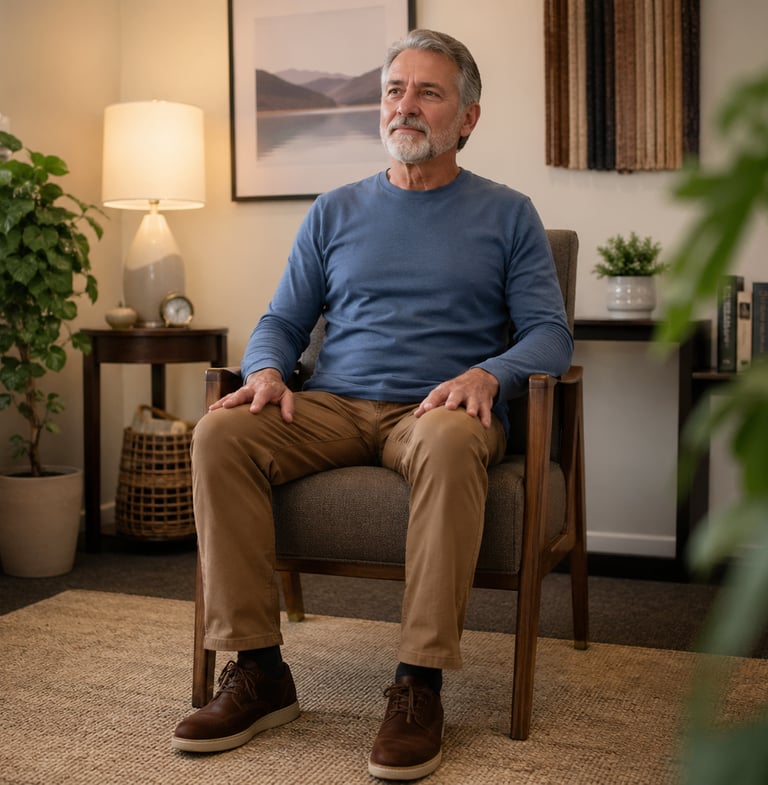
“John” came to see me following prostate surgery.
His name and identifying details have been changed for privacy, but his experience reflects something I often see in clinic: the body may have physically healed, while the mind and nervous system still need support to reconnect, coordinate and trust.
John was already working with a specialist physiotherapist. He understood which pelvic floor muscles he needed to activate.
The challenge was not knowledge.
The challenge was timing, access and control.
He knew what he wanted his body to do. He could describe the muscles. He had been given the exercises. Yet in the moments that mattered, he could not reliably activate the response.
Alongside this, John carried a long history of physical injuries, trauma and disappointment in his body. Anxiety was high. Trust was low.
That matters because pelvic floor control is not purely mechanical.
It is neurological, emotional and behavioural.
Understanding the bigger picture
When anxiety is elevated, the nervous system can shift into protection mode.
Muscles may guard. Coordination can reduce. Subtle activation patterns can become harder to access. The body may begin responding as though it is under threat, even when the conscious mind knows it is safe.
Before attempting performance improvement, we first needed to reduce interference.
In John’s case, this meant supporting:
Nervous system regulation
Body confidence
Mind–muscle communication
A sense of internal safety
Reduced anxiety around performance and control
This is where hypnotherapy can be useful as a complementary support.


See Availability
Session 1: Clearing the Interference
The first progressive session focused on helping John’s nervous system settle.
The aim was to reduce internal threat signals and create a calmer foundation for rehabilitation work.
Using structured relaxation, hypnotic suggestion, guided visualisation and subconscious realignment, we worked on:
Reducing sympathetic overdrive
Releasing unresolved emotional load connected to past injuries
Rebuilding a sense of safety within the body
Supporting confidence in the body’s ability to respond
Preparing the mind for more precise neuromuscular rehearsal
Before asking the body to perform differently, it needed to feel safer.
That was the first step.
Learn More
Session 2: Re-Establishing Mind–Muscle Communication
In the next session, John described what successful pelvic floor control would look and feel like.
This gave us a clear internal target.
After a gentle breathing-based induction, we moved into targeted neuromuscular rehearsal. The purpose was to help the brain and body practise the desired activation pattern in a focused, calm and responsive state.
Within hypnosis, we worked with:
Healing and rejuvenation imagery
Precise muscular rehearsal
Visualisation to strengthen mind–muscle signalling
Pre-determined activation cues
Anticipatory control before movement
Calm confidence around pelvic floor activation
The goal was simple:
Not bracing.
Not reacting.
Pre-emptive activation.


The Immediate Result
At the end of the session, John reported feeling deeply relaxed.
As he stood to leave, something important happened.
Without prompting, he activated the pelvic floor muscles before initiating movement.
This activation continued successfully as he walked from the office.
He was visibly relieved.
For the first time in some time, the response felt automatic and accessible.
This was not presented as a “cure” or a guaranteed outcome. It was a meaningful clinical moment — one that showed his nervous system and body were beginning to communicate differently.
Ongoing Rehabilitation Support
This progress occurred after three completed sessions.
John continued working alongside his physiotherapist, while hypnotherapy supported the neurological and emotional side of recovery.
Further sessions focused on:
Strengthening access to the desired muscle response
Reducing anxiety that interfered with control
Building confidence in body function
Supporting emotional recovery from past physical trauma
Reinforcing new activation patterns through hypnosis and rehearsal
Hypnotherapy did not replace his physiotherapy.
It supported the parts of recovery that were more closely connected with anxiety, nervous system regulation, body trust and subconscious patterning.
Overcoming trauma with therapy support
Pelvic floor rehabilitation often involves learning how to access, coordinate and trust subtle muscle groups.
For some people, especially after surgery, injury, trauma or prolonged symptoms, this process can be affected by anxiety, frustration, fear of failure or disconnection from the body.
Hypnotherapy may assist by supporting:
Improved body awareness
Reduced anxiety-related muscular inhibition
Stronger mind–muscle communication
More effective mental rehearsal
Improved confidence in body function
A calmer internal state for rehabilitation practice
Better access to automatic responses
This approach is particularly relevant when someone understands the exercises, but struggles to reliably access the response.
Why Hypnotherapy May Help Pelvic Floor Rehabilitation
Hypnotherapy for Anxiety and Body Confidence
This Work May Be Relevant If You Are Experiencing
Difficulty accessing specific muscle groups
Pelvic floor rehabilitation challenges
Loss of confidence after surgery or injury
Anxiety around body function
A sense of disconnection from the body
Frustration despite doing the prescribed exercises
Recovery that feels emotionally or neurologically “stuck”
This work may be especially supportive for people already working with a physiotherapist, medical specialist or allied health practitioner.
Who This May Be Suitable For
A Gentle Note
Recovery is individual and outcomes vary.
Hypnotherapy is not a replacement for medical care, physiotherapy, pelvic floor therapy, surgery follow-up or specialist advice.
It may be used as a complementary support where nervous system regulation, anxiety, confidence, trauma history or subconscious patterning appear to be influencing recovery.
If you are currently under medical or allied health care, collaboration is always encouraged.
Clinical Hypnotherapist on the Sunshine Coast
Supporting the Nervous System Supports the Body
When the nervous system feels safer, the body often has more access to learning, coordination and change.
If you are navigating post-surgical recovery, pelvic floor rehabilitation, neuromuscular challenges or difficulty accessing specific muscle groups despite appropriate treatment, hypnotherapy may provide supportive assistance.
Appointments are available in Palmwoods on the Sunshine Coast and online.


Ask About Rehabilitation Support Hypnotherapy
© Your Mind Redesigned 2026
Join the newsletter for practical insights into stress regulation, behavioural change and subconscious patterns — plus occasional guided hypnosis recordings.
We put a lot of love and thought into our newsletters. Head over and see what we have to share with you.
Online & Face to Face
Palmwoods, Sunshine Coast
Queensland, Australia
Stay in the loop
Your Mind Redesigned acknowledges the Traditional Custodians of the lands we live on. We pay our respects to all Elders, past and present, of all Aboriginal and Torres Strait Islander nations.